GCC Access Control Deployment: One Platform, Configured for Every Country's Rules

Security licensing and data protection rules differ across the UAE, Saudi Arabia, Qatar, Bahrain, Kuwait, and Oman. TEKACCESS deploys as one platform and is configured site by site to match each country's requirements.

Request a Regional Deployment Plan

What Is GCC-Wide Access Control Deployment?

GCC-wide access control deployment means running one access control platform across offices, facilities, or sites in more than one Gulf country, rather than a separate, unrelated system per country. The hardware pattern is usually the same, readers, controllers, and credentials, at every site.

What changes from country to country is everything around that hardware: which regulator has to approve the installation, whether the installer needs to be locally licensed, how biometric data is allowed to be stored, and whether that data has to stay on servers physically located in-country. A TEKACCESS access control system deployment handles the hardware and dashboard side once; the country-specific rules still have to be handled per site.

Access control reader mounted beside a glass office door, with a modern office corridor visible beyond it
The same reader and controller hardware is installed at every site; only the country-specific compliance layer changes.

How One TEKACCESS Deployment Spans Multiple GCC Countries

Every site, regardless of country, runs on the same reader and controller hardware and reports into the same TEKACCESS dashboard. What's configured per site is the compliance layer: which local approval was obtained, where that site's data is stored, and which consent language its enrollment screens use.

Diagram showing access control credentials feeding into a controller, then into the TEKACCESS platform and dashboard, with per-country configuration applied at each site
The same credential-to-dashboard flow runs at every site; per-country configuration sits on top of it.

One Shared Dashboard

Per-Country Compliance Configuration

Local Data Residency Options

Unified Credential Management

Country-by-Country Access Control Deployment Requirements

The notes below are a starting point for planning, not a substitute for confirming current requirements with the relevant regulator for a specific site. Rules change, and requirements can vary by facility type.

UAE Access Control Deployment: SIRA and PDPL

In Dubai, electronic security systems and their installers are generally expected to go through approval from the Security Industry Regulatory Agency (SIRA), which operates under Dubai Police. The UAE's federal Personal Data Protection Law (PDPL) also applies to any personal data the system collects, including biometric identifiers.

Saudi Arabia Access Control Deployment: HCIS and PDPL

For industrial and critical-infrastructure sites, Saudi Arabia's High Commission for Industrial Security (HCIS) certifies security systems and providers. Saudi Arabia's PDPL, administered by SDAIA, governs how personal and biometric data collected at the door is processed and stored.

Qatar Access Control Deployment: Data Protection Rules

Qatar's data protection law governs the collection and processing of personal data, and biometric identifiers used for access control fall within its scope. Facility-specific security approval requirements should be confirmed with the relevant authority for the site's sector.

Bahrain Access Control Deployment: PDPL and Biometric Data

Bahrain's PDPL treats biometric data as a sensitive category, which typically means extra safeguards and, in many cases, explicit consent before enrollment. This affects how an access control rollout's consent and enrollment screens should be worded.

Kuwait Access Control Deployment: CITRA and PDPL

Kuwait's Personal Data Protection Regulation is administered by CITRA, the Communication and Information Technology Regulatory Authority, and covers how personal data, including biometric data captured by access control hardware, is stored and processed.

Oman Access Control Deployment: PDPL Requirements

Oman's Personal Data Protection Law, together with its executive regulations, sets out how personal data is collected, stored, and processed, and applies to biometric data gathered through access control systems in the same way as other GCC PDPL frameworks.

Centralized Monitoring Across Every GCC Site

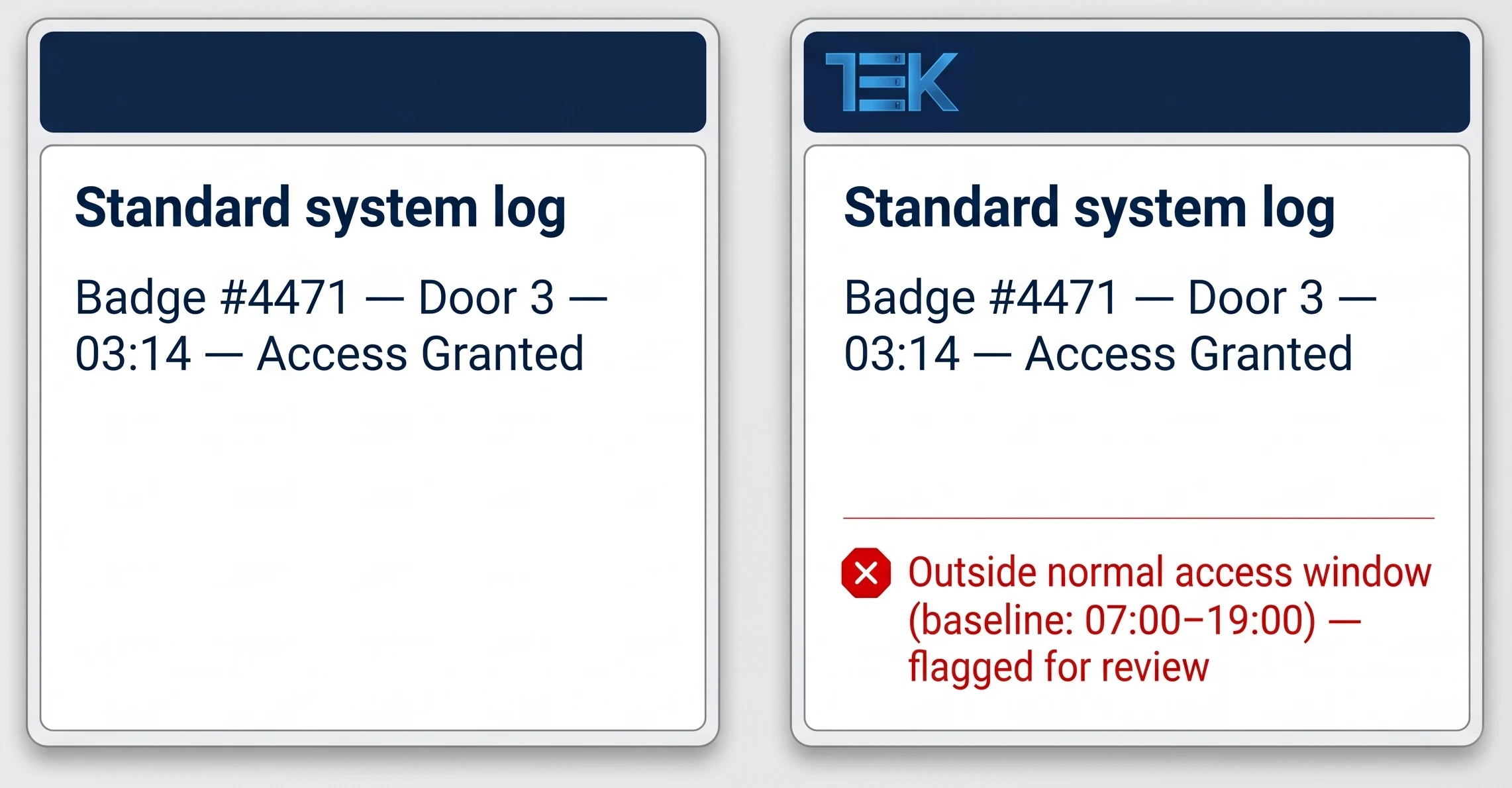
Whichever country a site is in, the security team sees the same dashboard, the same alert format, and the same event history, rather than switching between different systems per country. Anomalies get flagged the same way at every site.

Comparison of a standard access control log entry versus the same event flagged as an anomaly, shown in the shared TEKACCESS dashboard
The same flagging logic applies whether the site is in Dubai, Riyadh, or Manama.
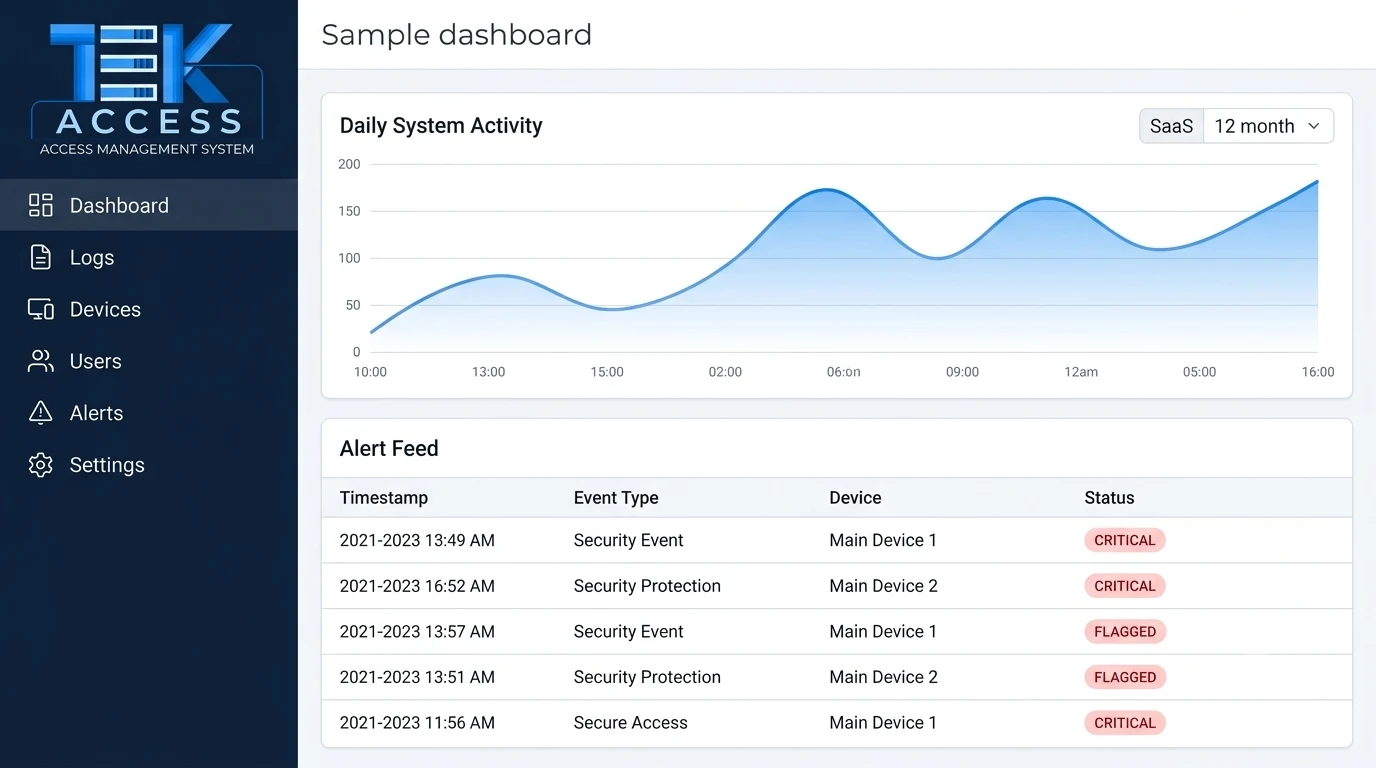
Sample TEKACCESS dashboard showing access events and alerts from multiple sites
Sample dashboard — for illustration only, not a live client environment.

Common Challenges in a Multi-Country GCC Access Control Deployment

The most common friction point isn't the hardware, it's the compliance layer around it. Each GCC country has its own security-licensing body, its own approval timeline, and its own rules for where biometric and personal data can be stored, so a rollout plan built around one country's requirements often stalls when it's applied to the next site without changes.

Consent and enrollment language is a common miss too: wording that satisfies one country's data protection law doesn't automatically satisfy another's, particularly where biometric data is treated as a sensitive category. Regulations also change, so a deployment plan needs a way to re-check requirements per site rather than treating an earlier approval as permanent.

Rollout Process for a Multi-Country Access Control Deployment

The hardware and platform rollout follows the same installation and support process at every site; what changes is the compliance work that runs alongside it, country by country.

Site Assessment & Regulatory Mapping

Hardware Install & Credential Setup

Per-Country Compliance Sign-Off

Centralized Go-Live & Monitoring

What this page doesn't cover

Regulatory requirements change, and the specific approval needed for a site depends on its country, sector, and facility type. This page is a starting point for planning a multi-country deployment, not a compliance determination for any specific site.

It also doesn't cover Egypt, the USA, or the UK, where Tektronix also deploys access control systems under a different set of local rules.

Frequently Asked Questions

Can one access control system be deployed across multiple GCC countries?

Yes. TEKACCESS runs as a single platform across sites in different GCC countries, with one dashboard for the whole deployment, while each country's installation is still configured to meet that country's own security approval and data protection requirements.

Do access control systems need SIRA approval in Dubai?

Electronic security systems installed in Dubai are generally expected to go through the Security Industry Regulatory Agency (SIRA), which operates under Dubai Police and approves both security products and the installers who deploy them. Requirements can vary by facility type, so this should be confirmed for each specific site.

What is HCIS certification for security systems in Saudi Arabia?

HCIS is the High Commission for Industrial Security in Saudi Arabia, which certifies security systems and providers for industrial and critical-infrastructure facilities. Whether a given deployment needs HCIS certification depends on the facility and sector involved.

Does GCC data protection law apply to biometric access control data?

In most GCC countries, yes. The UAE, Saudi Arabia, Qatar, Bahrain, Kuwait, and Oman each have their own personal data protection law, and biometric identifiers such as fingerprints or facial templates are typically treated as sensitive data requiring extra safeguards and, in many cases, explicit consent.

Is Kuwait's data protection law relevant to access control deployments?

Yes. Kuwait's Personal Data Protection Regulation, administered by CITRA (the Communication and Information Technology Regulatory Authority), governs how personal data, including biometric data collected by access control systems, is processed and stored.

What's different about deploying access control in Oman versus the UAE?

Both countries have their own personal data protection law and their own security licensing expectations, but the specific approval bodies, documentation, and timelines differ. A deployment plan needs to be checked against each country's current rules rather than assumed to carry over from one to the other.


Plan a Deployment Across Your GCC Sites

Get a country-by-country deployment plan for your sites, covering hardware, local approval steps, and data residency options, before rollout starts.

Request a Regional Deployment Plan